posted on 12/19/2025
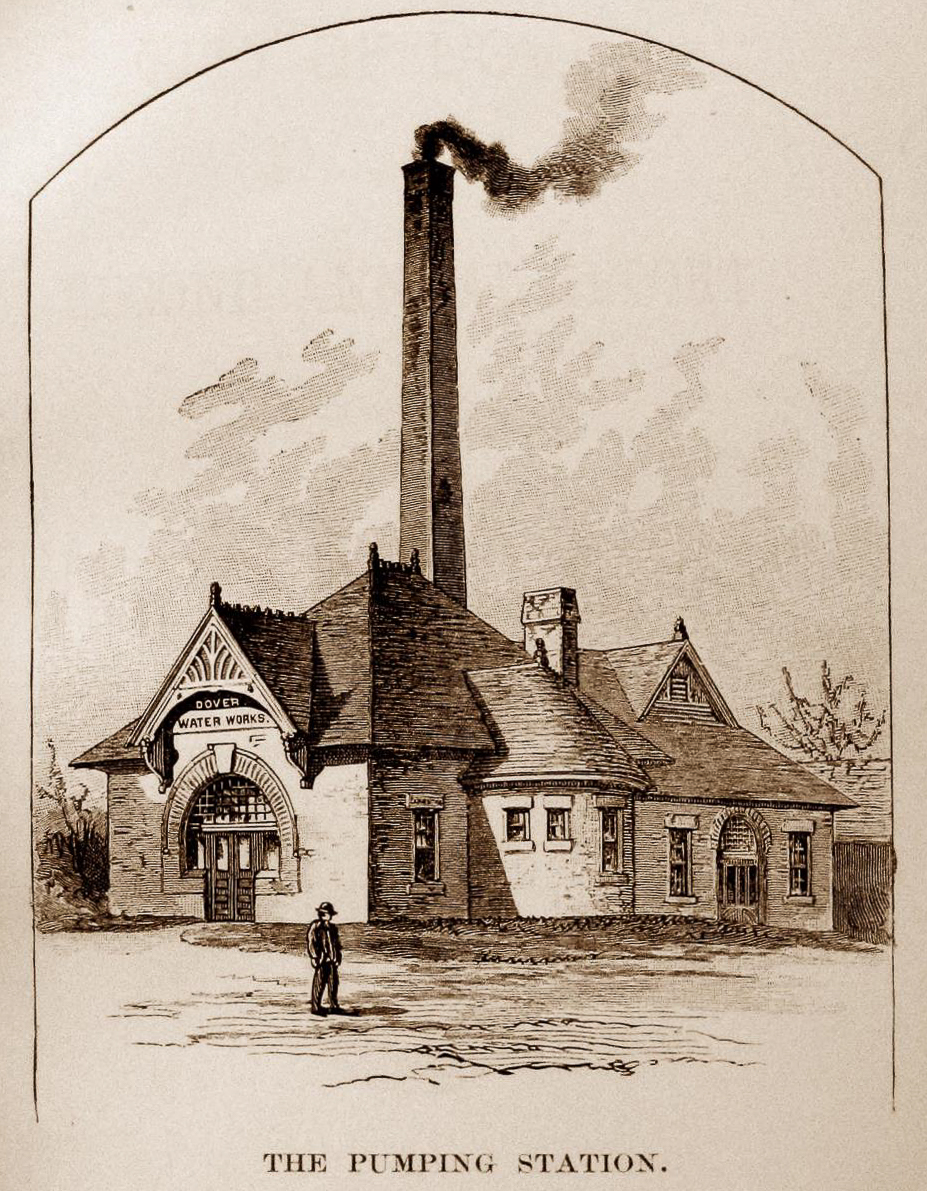 The City of Dover was awarded a $12,500 preservation grant from the New Hampshire Land and Community Heritage Program (LCHIP) to support a building assessment of the historic Dover Water Works Pumping Station on Lowell Avenue.
Constructed in 1888, the Pumping Station was the city’s first municipal drinking water pumphouse. It was erected on Page’s Field, a site with a natural spring that had belonged to the Dover Landing Aqueduct Company, one of three private water utility companies purchased by the city, authorized by voters in 1887.
The building filtered water received from Willand Pond through a sand filter, and then propelled it to an open reservoir at the top of Garrison Hill via a steam pump powered by coal-fired boilers. Pumping water to the top of Garrison Hill immediately improved Dover’s quality of life by providing water pressure around the city for drinking and fighting fires. The site was deemed eligible for listing in the National Register of Historic Places based on a 2011 review, which stated the building “is a true and exceptional example of the Queen Anne style, combining a variety of pronounced architectural features representing several styles.”
The LCHIP grant sought by Dover’s Planning and Community Development Department will fund a comprehensive building assessment and structural review to better understand the structure’s condition and the potential feasibility of preserving and readapting the pumping station.
Dover’s Heritage Commission has supported efforts to explore preservation options for this historic building.
"This grant is a step in the right direction," said Heritage Commission Chair Jeff Spires. "We're looking forward to seeing what comes from this assessment."
The Dover Water Works preservation award, which requires a match from the city, was among the more than $3.5 million in matching grants to support 31 land conservation and historic preservation projects across the state announced during a ceremony in the statehouse with Gov. Kelly Ayotte on Dec. 9. These LCHIP awards aim to help communities restore historic landmarks, conserve working forests, and protect natural and cultural resources.
The New Hampshire Land and Community Heritage Investment Program (LCHIP) is an independent state authority providing matching grants to New Hampshire’s municipalities and non-profits, helping to preserve the state’s most important natural, cultural, and historic resources and ensure their contribution to the economy, environment, and quality of life in New Hampshire. LCHIP grants are funded by a $25 fee assessed when deeds, mortgages, and plans are recorded at the state’s ten registries of deeds. Since 2001, LCHIP has awarded 646 grants, totaling over $68 million. As of July 2025, the program’s investment has helped to conserve 247,000 acres of land and rehabilitate 192 historic structures across 206 communities in the state. Learn more about LCHIP at LCHIP.org, on Instagram, or Facebook.